Best welding helmets, compared on what the makers actually publish
Six auto darkening welding helmets ranked on published safety standards, shade range, low amp tig rating, weight and warranty. One maker names no standard.
A welding helmet has one job before all others: darken to a safe shade the instant the arc strikes. Listings lead with view size and clarity (what those specs mean). We started with a plainer question.
Does the maker say, in writing, which safety standard the helmet meets? Seven of the eight helmets we checked do. Among those, the Hobart Inventor covers most home welding at the lowest price, and the Lincoln Viking 3350 and ESAB Sentinel A60 add range, tig sensitivity and longer support.
Eight helmets, as their makers describe them
All figures as published by each maker, checked 2026-09-19. “Not published” means we looked and the maker does not state it.
| Helmet | Standards named | Dark shades | View | Lowest tig rating | Weight | Warranty |
|---|---|---|---|---|---|---|
| Hobart Inventor 770890 | ANSI Z87.1-2015, CSA Z94.3-15, EN 379 | 9 to 13 | 9.3 sq in | Rated, no figure | 19.7 oz | 2 years |
| Lincoln VIKING 3350 | ANSI Z87.1, CSA Z94.3 | 5 to 13 | 12.5 sq in | 2 A | 595 g | 5 years |
| ESAB Sentinel A60 | ANSI Z87.1+, CSA Z94.3, EN 379, EN 175 and others | 5 to 9 and 9 to 13 | 4.65 x 2.8 in | 3 A | 644 g | 3 years |
| Miller Digital Elite 4x | ANSI Z87.1+, CSA | 8 to 13, cut 5 to 8 | 9.2 sq in | 5 A and below | 20.5 to 21.4 oz | 4 years, lens |
| Lincoln VIKING 1740 | ANSI Z87.1, CSA Z94.3 | 9 to 13 | 6.3 sq in | 5 A | 528 g | 5 years |
| Jackson Insight 46131 | ANSI Z87.1, CSA Z94.3 | 9 to 13 | 9.3 sq in (page) | 5 A | 24 oz | 2 years |
| ESAB Savage A40 | EN 379, EN 175; “ANSI, CSA” without numbers | 9 to 13 | 3.93 x 1.96 in | 5 A | 490 to 500 g | 2 years |
| YesWelder LYG-M800H | Not published | 5 to 9 and 9 to 13 | 3.93 x 3.66 in | Not published | Not published | 1 year |
Sources: Hobart spec sheet; Lincoln 3350 product page and 1740 manual IM10726; ESAB Savage A40 fact sheet, A60 product page and manual; Miller spec sheet AY/43.0; Jackson manual; YesWelder product page.
What the columns mean for your eyes
Standards named. ANSI Z87.1 is the US eye and face protection standard, and a maker that names it is making a claim it can be held to. YesWelder’s page names none, which is why that helmet is mentioned and not ranked.
Dark shades. Set the shade from the welding helmet shade chart. A 9 to 13 range suits home mig, flux core and stick. Plasma cutting and low amp tig are where a lower range earns its place.
Lowest tig rating. A small tig arc can fail to trigger weaker sensors, and the lens stays light. For tig, this number matters more than view size. See tig welders explained.
Clarity ratings. Five of the eight print 1/1/1/1, and only ESAB ties that to EN 379. Treat an unsourced 1/1/1/1 as marketing until the maker names the standard.
Picking by the welding you do
Mig, flux core or stick at home, an hour or two at a time: the Hobart, or the Viking 1740 if the five year warranty matters more to you than view size. Tig, plasma cutting, or long sessions where view and headgear comfort add up: the Lincoln or the ESAB. Outdoor work where sensors get blocked: the Miller’s X-Mode is built for it.
What a helmet does not do
Wear safety glasses under it, and test that the lens darkens before every session. The full list of what it leaves open is in what a welding helmet does not protect against. A helmet reduces specific hazards. It does not make welding safe. The rest of the gear is in welding for beginners.
How we score
Every pick is scored on the same five criteria. We work from published specs, not from bench tests: every figure comes from the manufacturer’s manual, spec sheet or current listing at write time, with the model number and the date checked. We never estimate a number a manufacturer does not publish.
Specs published
Whether the manufacturer publishes what a buyer needs: duty cycle at a stated amperage, input amp draw, and the breaker the machine requires. A missing number costs points and is marked "Not published".
Arc time
Duty cycle (the share of a ten minute window a machine can weld before it must cool, rated at 104 F under IEC 60974-1) converted into minutes of arc per ten at a working amperage.
Build & parts
Wire drive, torch and leads, and whether consumables and spare parts are easy to buy. Owner reports are attributed to their source and never presented as our testing.
Power fit
Input voltage options and amp draw set against the circuits a home garage usually has. The work of adding a circuit belongs to a licensed electrician.
Value & warranty
What you get for the price, weighted by warranty length and how the brand handles service and parts.
Price bands, relative to the picks on this page: $ budget · $$ mid-range · $$$ premium · $$$$ top shelf. Amazon prices move constantly, so we show bands rather than dollar amounts; each button shows the live price.
Best for most home welders
Hobart Inventor 770890
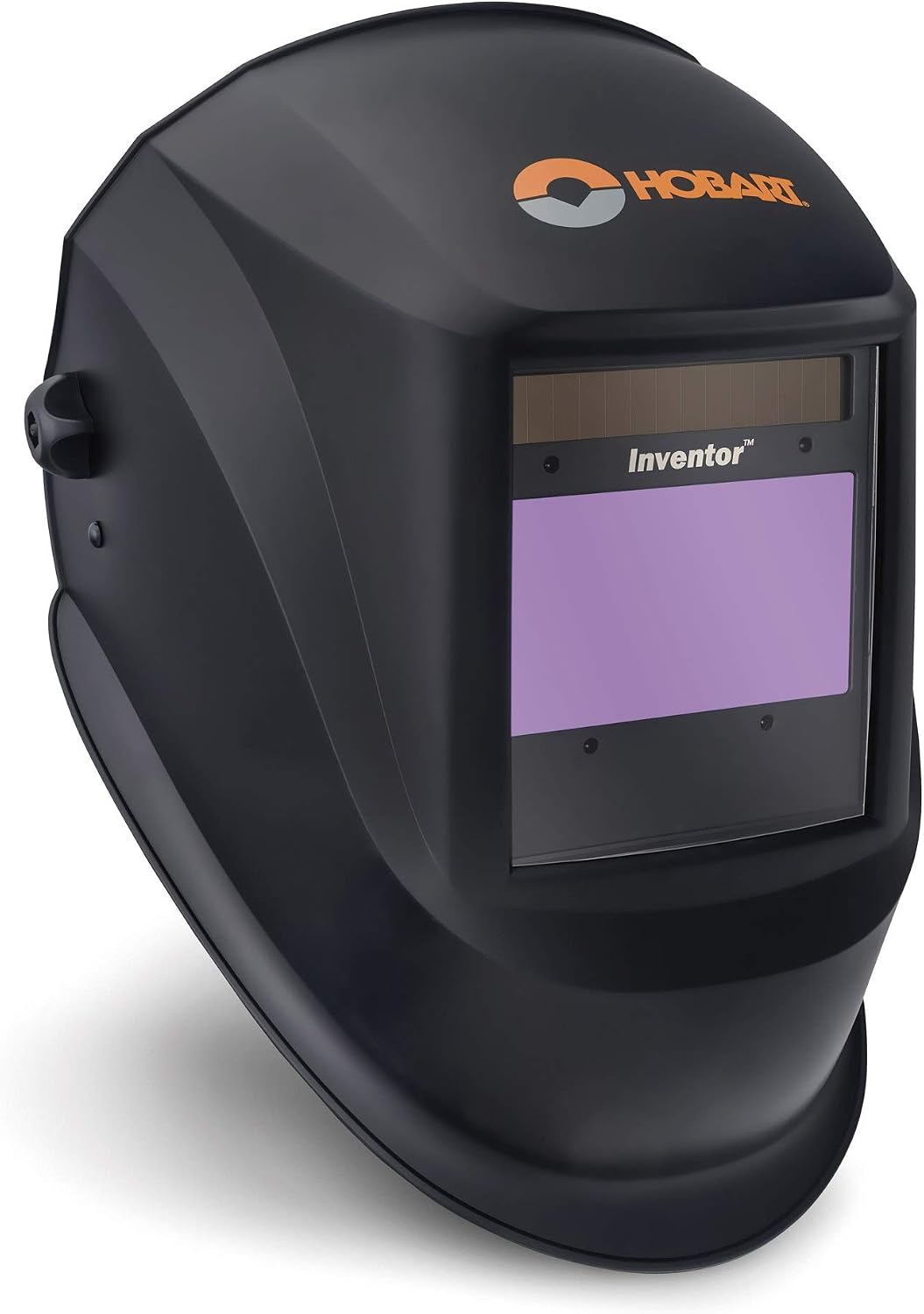
The lowest priced pick is also one of the clearest about safety standards. Hobart's manual names ANSI Z87.1-2015, CSA Z94.3-15 and EN 379, with editions, which the dearer helmets here do not all manage. The view is 9.3 square inches, there are four arc sensors, and at 19.7 ounces it is the lightest published weight in the group. Dark shades run 9 to 13 with a grind mode. There is no cut mode and no lighter shade range, and Hobart says it is low amp tig rated without publishing an amperage. No optical class is published. Two year warranty.
Pros
- Standards named with editions: ANSI Z87.1-2015, CSA Z94.3-15, EN 379
- 19.7 oz, the lightest published weight here
- Maker sells cover lens kits, headgear and replacement lens cartridges
Cons
- Shades 9 to 13 only, with no cut mode
- No optical class and no tig amperage figure published
- Two year warranty
Biggest view and longest warranty
Lincoln Electric VIKING 3350
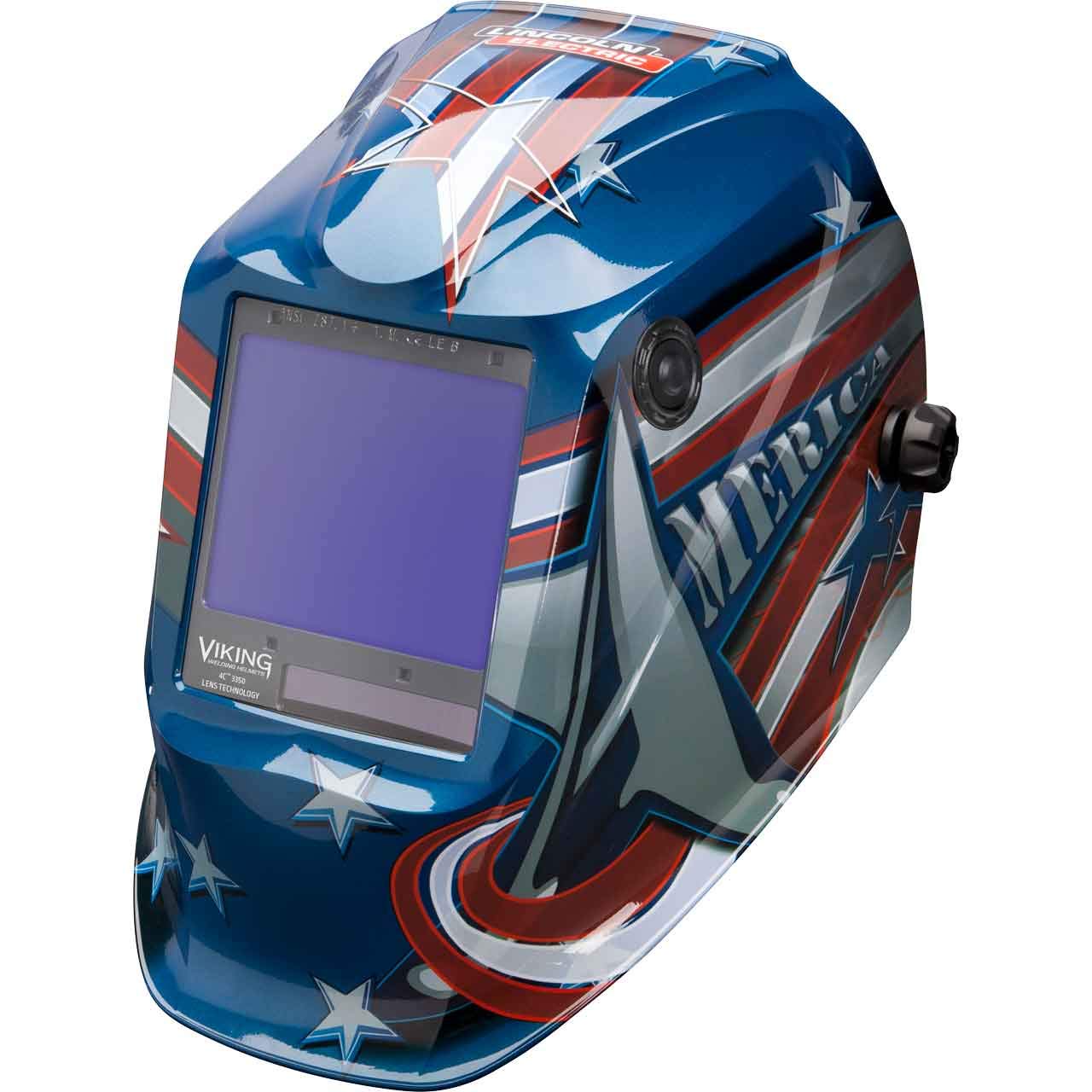
The 3350 has the largest published viewing area here, 12.5 square inches, a continuous 5 to 13 shade range with cut and grind modes, and the lowest tig rating in the group at 2 amps. Lincoln backs it for five years and sells every wear part, from cover lenses to three styles of headgear. It claims ANSI Z87.1 and CSA Z94.3 without stating editions, and a 1/1/1/1 clarity rating without naming the standard behind it. The linked listing is the All American graphic, K3175-4.
Pros
- 12.5 sq in view; shades 5 to 13 with cut and grind modes
- Tig rated to 2 amps, AC and DC
- Five year warranty and a full parts list
Cons
- Highest price band on this page
- Lincoln's page and spec sheet give 22 oz and 21 oz for the same 595 g
- Standard editions and the basis of the clarity rating not stated
Most complete published standards
ESAB Sentinel A60
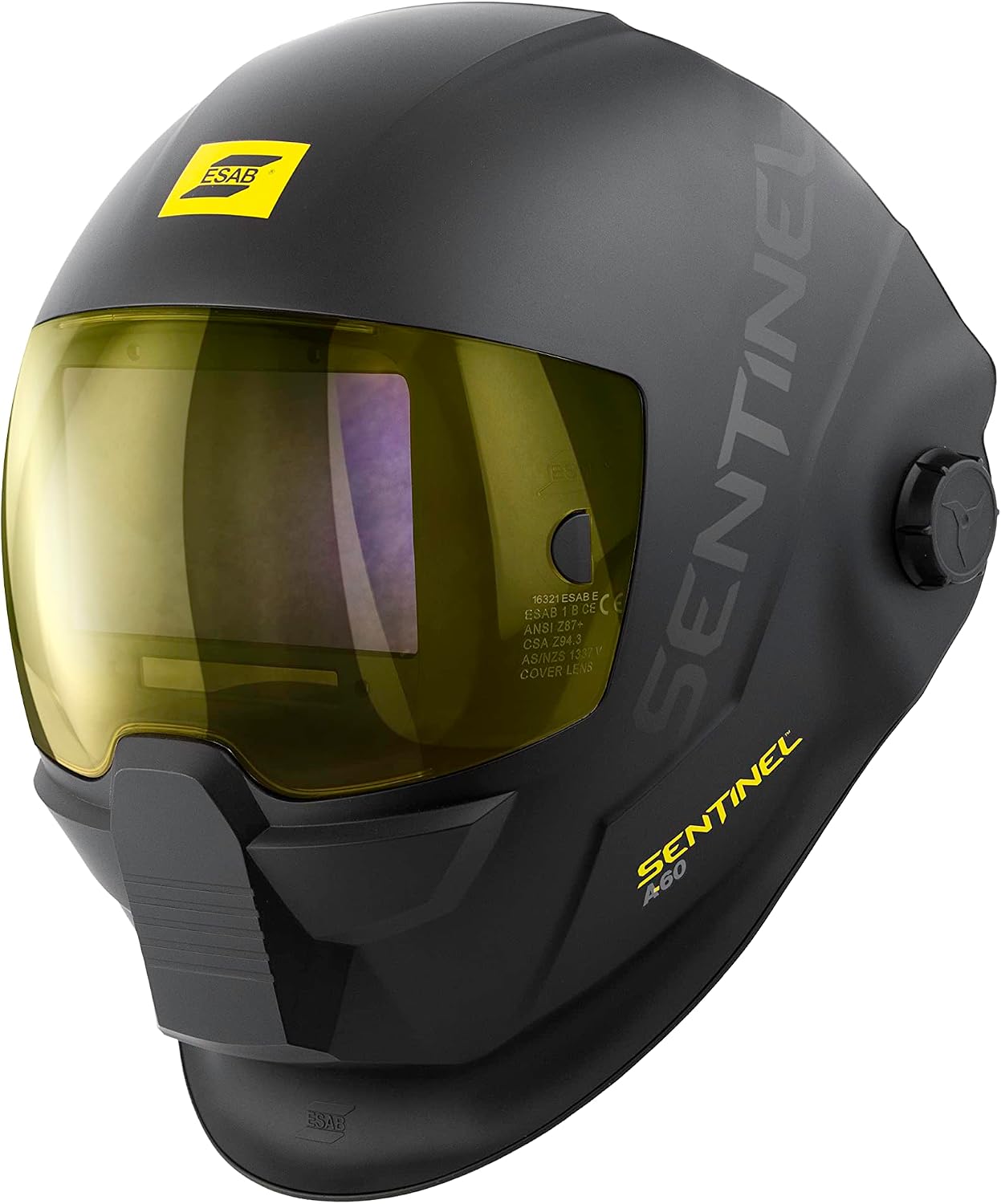
ESAB publishes more about compliance than anyone here: EN 379 with its edition for the 1/1/1/1 rating, EN 175, EN 166, CSA Z94.3, ANSI Z87.1+ and others. The view is 4.65 by 2.8 inches, shades run in two ranges from 5 up to 13 with an external grind button, and it is tig rated to 3 amps. Weight is 644 grams, about 1.4 pounds. The warranty is three years, excluding the battery.
Pros
- Optical rating tied to EN 379, edition stated in the manual
- Two shade ranges from 5 to 13; tig rated to 3 amps
- Every part sold separately, including the shell
Cons
- No cut mode is named; the low range covers those shades
- ESAB's own pages conflict on battery count and range wording
- No square inch viewing figure published
Most modes, and an honest clarity rating
Miller Digital Elite, ClearLight 4x
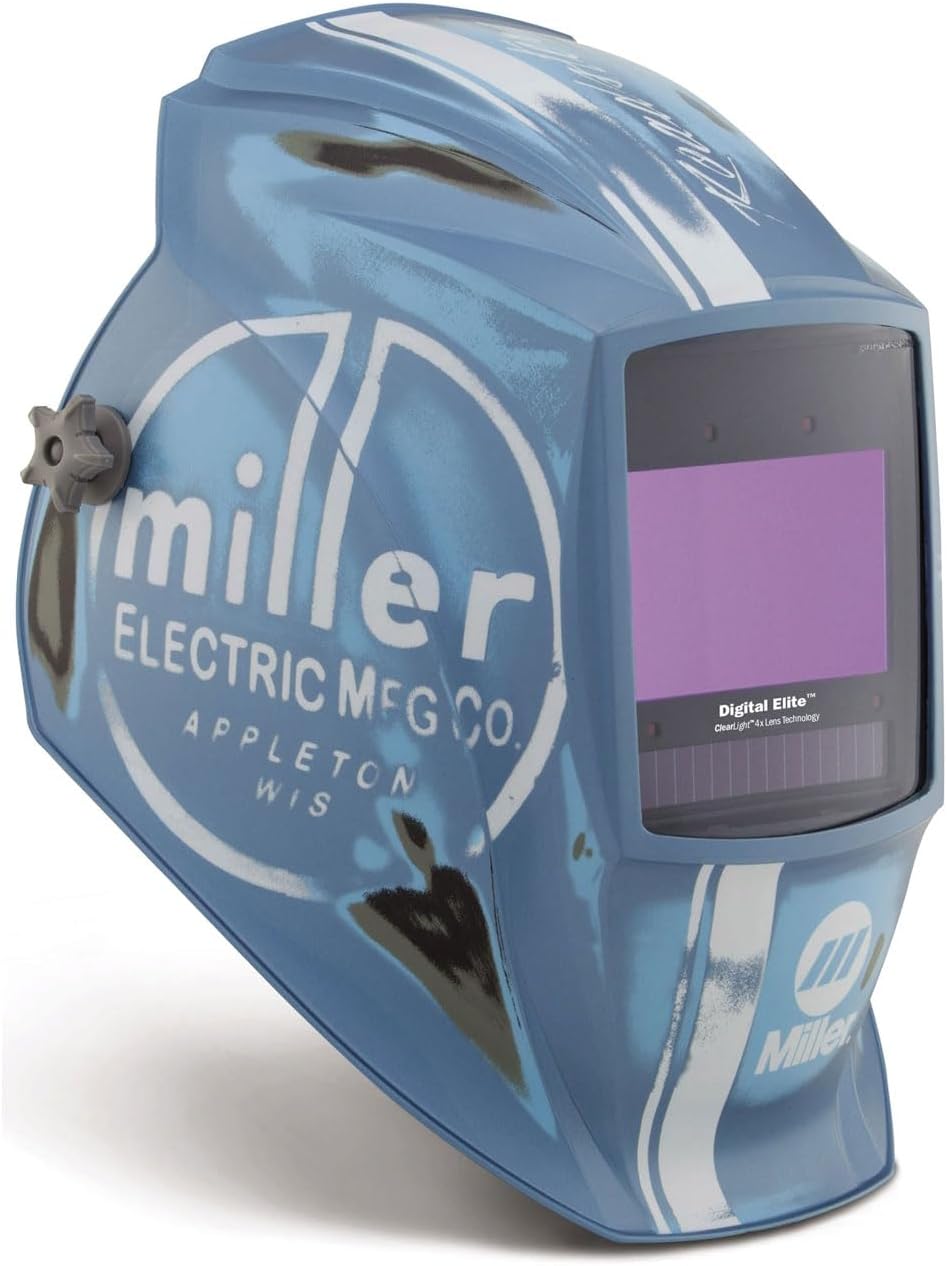
Four modes: weld at 8 to 13, cut at 5 to 8, grind at 2.5, and X-Mode, which senses the arc electromagnetically for outdoor or obstructed work. Miller's August 2026 spec sheet rates the lens 1/1/1/2 under EN 379, where rivals print 1/1/1/1 and mostly do not name a standard. We count the candor in its favor. The view is 9.2 square inches, tig rating is 5 amps and below, and the lens carries a four year warranty.
Pros
- Separate weld, cut, grind and X-Mode settings
- Optical rating tied to EN 379 and stated as 1/1/1/2
- Four year lens warranty; parts sold by the maker
Cons
- Top price band
- Power source details not published for this model
- Standard editions not stated
Five year warranty at a middle price
Lincoln Electric VIKING 1740 (K3282-4)
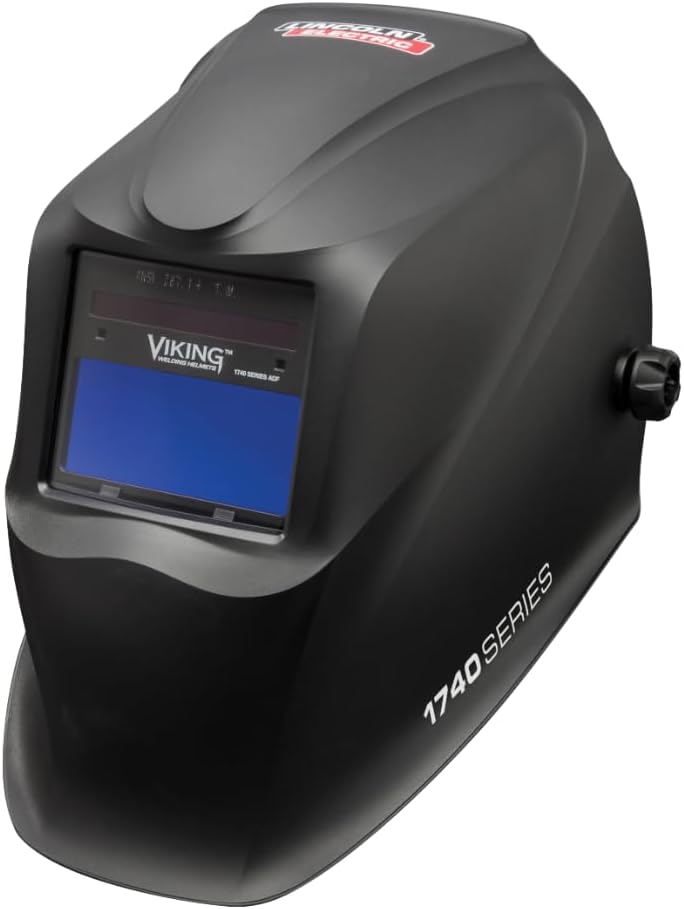
The 3350's smaller sibling keeps Lincoln's five year warranty and full parts list at about a third of the price band. The manual's spec table names ANSI Z87.1 and CSA Z94.3, and the lens cartridge is marked Z87 W3/9-13. You give up view, 6.3 square inches, and sensors, two where the others have four. Shades run 9 to 13 from a light state of 3, with a grind setting and no cut mode, and tig is rated to 5 amps. It runs on two AAA batteries with solar assist and weighs 528 grams. K3282-4 is a new part number for a long-selling helmet, so this listing's review count is still low.
Pros
- ANSI Z87.1 and CSA Z94.3 named in the manual; lens marked Z87
- Five year warranty; cover lenses, headgear and cartridge sold separately
- AAA batteries, replaceable anywhere
Cons
- Two arc sensors and the smallest view here
- No cut mode; manual and brochure disagree on the grind shade, 4 or 3
- Standard editions not stated
Mid-priced, with documents that need a second look
Jackson Safety Insight 46131
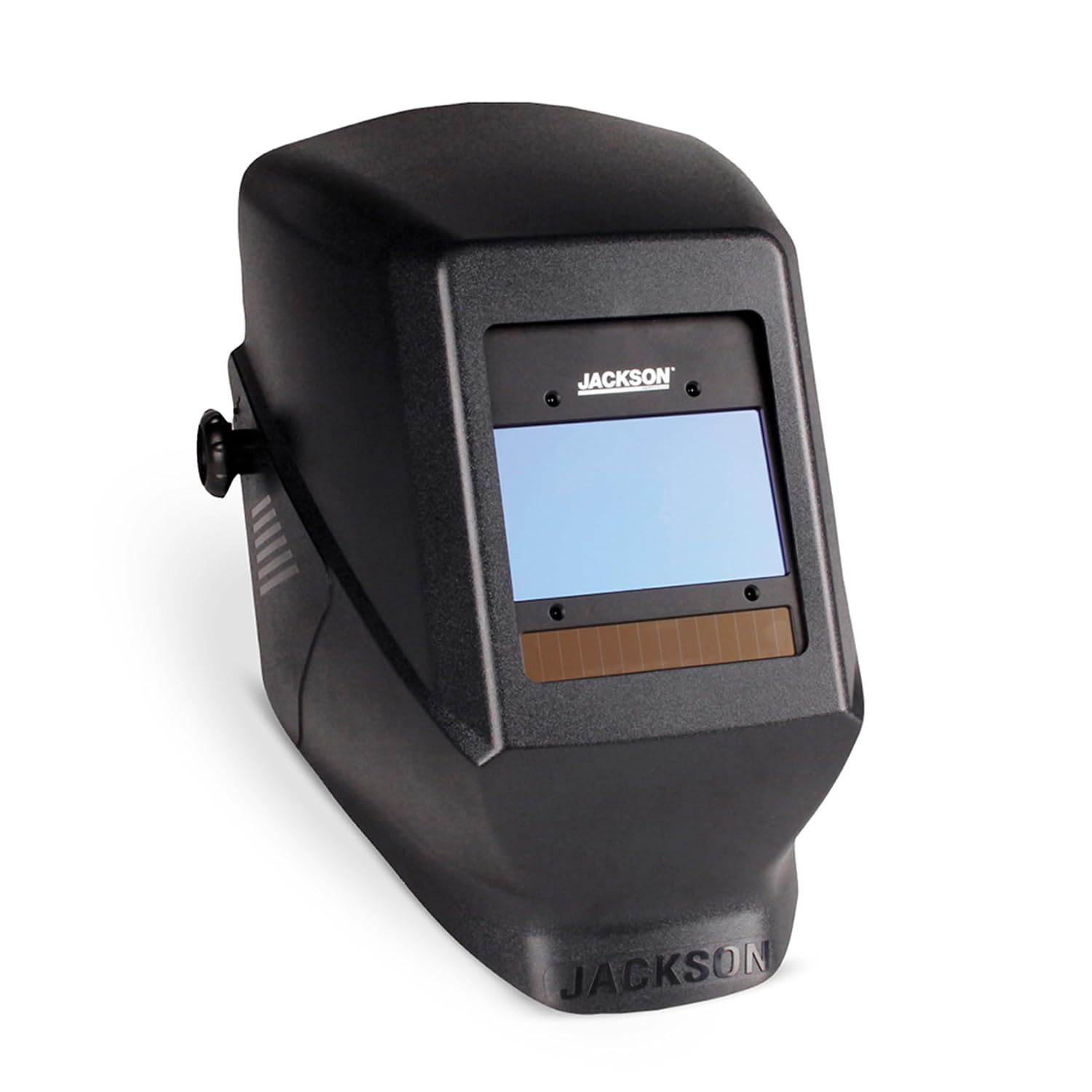
A long-running industrial helmet at a middle price. Shades run 9 to 13 from a light state of 4, with four sensors and a stated switching time of one ten-thousandth of a second, slower than the others here. It is rated for tig at 5 amps and up. Jackson's web page and manual differ on viewing dimensions, and the page lists cutting and torch modes that the manual cover does not show. The manual says the helmet is not for torch or plasma work unless it has the torch mode. At 24 ounces it is the heaviest here.
Pros
- ANSI Z87.1 and CSA Z94.3 stated; lens marked W9-13
- Two year warranty and a full parts list
- Published battery life of 485 to 823 hours
Cons
- Web page and manual disagree on view size and modes
- Heaviest published weight, 24 oz
- Slowest stated switching speed here
Also worth considering
Strong, well-reviewed products that just missed our ranked list - worth a look if the picks above aren't quite right for you.
- YesWelder LYG-M800H - Very large view, two shade ranges and a low price, but the maker's product page names no safety standard. Check the lens and shell for a Z87.1 marking before use. One year warranty.
- ESAB Savage A40 - A lighter, cheaper ESAB with four sensors and a 1/1/1/2 rating tied to EN 379. ESAB's fact sheets name EN 379 and EN 175 by number but say only ANSI and CSA, and ESAB's US product page for it is gone, so it may be on its way out.
Frequently asked questions
What should I look for in a welding helmet?
First, a named safety standard: ANSI Z87.1 in the US, with CSA Z94.3 in Canada. Then a dark shade range that covers your process, a low amp tig rating if you will tig weld, a weight you can wear for an hour, and a maker that sells replacement cover lenses and headgear. Viewing area and clarity ratings matter after those.
What does 1/1/1/1 mean on a welding helmet?
It is an optical rating from the European standard EN 379. The four numbers grade, in order, optical distortion, light scatter, evenness of shade across the lens, and how the shade holds at an angle. One is best and three is worst. Only ESAB and Miller tie their rating to EN 379 in the documents we read. Miller's own spec sheet rates its ClearLight 4x lens 1/1/1/2.
Is a cheap auto darkening helmet safe?
Price is not the test. The test is whether the maker states which safety standard the helmet meets and marks the lens accordingly. Hobart's Inventor is the lowest priced ranked pick and names ANSI Z87.1-2015 and CSA Z94.3-15 in its manual. If a product page names no standard, check the lens and shell for a Z87.1 marking before you use it, and return it if there is none.
How long does an auto darkening helmet last?
Warranties on the ranked helmets run from two to five years. ESAB's manual recommends a use period of five years. Cover lenses are consumables and should be replaced when pitted or scratched. Most helmets here use replaceable CR2450 coin cells with solar assist, so a dead battery does not end the helmet's life.